

El animador 3D utiliza software avanzado para crear imágenes de personajes u objetos tridimensionales en movimiento.
Bachelor's Degree
Digital Animation
 OFFICIAL UNIVERSITY DEGREE4 years / 240 ECTS / 60 PLACESLanguage: SpanishMADRID CAMPUS / ON-SITE Presencial
Build a creative career in animation by learning how to tell visual stories that move, inspire and connect with audiences.
The Bachelor’s Degree in Digital Animation at Voxel School is a four-year official university qualification designed to train you as a highly skilled professional across three core dimensions: artistic, creative and technological. The programme reflects the fast-paced evolution of the audiovisual industry, shaping you into a versatile and well-rounded profile. You will learn alongside leading industry professionals, developing the ability to manage audiovisual projects across all stages of production while mastering the essential tools of the trade.
AFFILIATED WITH

DO YOU WANT TO KNOW MORE? Contact us
Career opportunities
El animador 2D crea imágenes dibujadas en una superficie plana para luego darles movimiento.
El Rigging Artist es un creador de esqueletos para personajes animados en 3D. Cada uno de estos personajes, para poder moverse de forma correcta, necesita una estructura interna de huesos y articulaciones.
Un artista de modelado 3D se encarga de dar vida a los personajes y las animaciones. Un artista de modelado 3D puede realizar trabajos para videojuegos, pero también para películas de acción real o para televisión.
Es quien se encarga de la interpretación del storyboard para plantear a los animadores las principales imágenes de una escena. Trabaja en la posición inicial y final del personaje, su ubicación respecto a otros elementos, las expresiones o gestos importantes, así como los tiempos que deben transcurrir para lograr sincronía.
Curriculum
Voxel School has designed a curriculum for the official degree
of "Digital Animation" fully adapted
to the needs of the sector, which guarantees that our
students will know in a theoretical and
practical way the latest trends from the hand of the best active teachers.
YEAR 1
YEAR 2
YEAR 3
YEAR 4
Academic Calendar


Semester 1: 30 ects
This course introduces the fundamental creative processes underlying artistic expression and practice, focusing on structured and practical approaches to idea generation through a range of methods and strategies designed to develop creativity through hands-on work.
Foundations of Creativity
-
You will learn to observe and capture reality through drawing, exploring a range of traditional and digital techniques. By applying different methodologies, you will develop the ability to convey visual and artistic thinking within a two-dimensional space through a solid understanding of the fundamental principles of form structure.
Artistic Drawing
-
Students take part in graphic projects using raster- and vector-based tools and applications.
Digital Image Processing
-
This course introduces the language of colour, including its characteristics, light and pigments, as well as its nature and effects. Students learn to create and apply different colour combinations in order to achieve effective visual expression.
Colour Theory
-
You will learn the principles of motion as applied to characters and different elements within 2D compositions.
2D Animation Fundamentals
Semester 2: 30 ects
You will learn how to develop the creative process, techniques, materials and tools used in sculptural practice, and how to apply them to any project.
Sculptural Fundamentals
-
This course introduces students to the design and development of graphic projects using vector-based tools and applications.
Vector Design
-
This course examines audiovisual production within the cultural industries, covering the theoretical foundations of artistic creation and design in visual and audiovisual media, as well as the analysis of communication phenomena and processes.
Visual History and Culture
-
This course takes a cross-disciplinary approach to the core areas of knowledge taught in the first year, integrating them into a pre-production design project.
Project Lab I: Pre-production Design
Academic Calendar


Semester 1: 30 ects
This course provides professional-level knowledge of the industry-standard software used to model and create all the elements commonly found in video games, including characters, weapons, assets, vehicles and environments.
3D Fundamentals
-
This course introduces the core principles of marketing and their application in digital media, alongside integrated communication. Students learn to develop plans and strategies for the creation of products and services within the creative industries, covering the different phases involved in bringing a production to market.
Digital Marketing and Applied Communication
-
You will develop a more advanced level of specialisation in the production and creation of audiovisual pieces, working with complete animation setups, complex movement cycles, advanced masking techniques and more sophisticated camera systems.
2D Animation I
-
This course equips students with the conceptual and technical tools required for narrative previsualisation through storyboarding.
Visual Narrative and Storyboarding
-
You will master character drawing techniques through the study of anatomy.
Drawing and Artistic Anatomy
Semester 2: 30 ects
You will learn to design objects and spaces within a 3D environment.
3D Design
-
You will master the principles of motion as applied to characters and various elements of 3D composition, while developing a solid understanding of three-dimensional animation in a digital environment.
3D Animation Fundamentals
-
These studies are oriented towards respect for and the promotion of human rights, the values of a culture of peace and democracy, and the principles of equality and solidarity, with a particular focus on the Sustainable Development Goals of the 2030 Agenda.
Ethics, Human Development and Personal Values I
-
In this course, students complete a project consisting of a narrative 2D audiovisual piece that brings together and applies all the knowledge and skills acquired throughout the course.
Project Lab II: 2D Animation
Academic Calendar


Semester 1: 30 ects
You will learn to understand and use audiovisual language and narrative in order to analyse and interpret audiovisual storytelling.
Audiovisual Language and Cinematography
-
This course further develops an advanced level of specialisation in the production and creation of audiovisual content. Students will work with complete animation setups, complex movement cycles, advanced masking techniques and more sophisticated camera systems.
2D Animation II
-
This course introduces the fundamental principles of 3D animation, including keyframing, animation curves, timing and layers. Students will work on animation cycles, the full workflow from blocking to polishing, pose-to-pose and straight-ahead techniques, as well as the animation of simple 3D characters.
3D Animation I
-
This course introduces students to the challenges involved in rigging objects and characters for animation, taking into account structural design, anatomy, physics and the animation principles to be applied.
Rigging and Setup
-
This course explores the processes involved in idea visualisation and the artistic pre-production of graphic projects.
Applied Pre-production and Visual Development
Semester 2: 30 ects
This course explores advanced 3D animation techniques and tools, including 3D character animation and complex scenes, crowd animation systems, and animation techniques based on motion capture.
3D Animation II
-
You will gain an in-depth understanding of facial anatomy and its relationship to the representation of emotion.
Facial Animation and Dialogue
-
These are teachings oriented toward respect for and the promotion of human rights, the values inherent to a culture of peace and democracy, and the principles of equality and solidarity, with a special focus on the Sustainable Development Goals of the 2030 Agenda.
Ethical, human and personal options training II
-
In this course, students produce a narrative 3D audiovisual piece that integrates all the knowledge and skills acquired during the third year of the programme.
Project Lab III: 3D Animation
Academic Calendar


Semester 1: 48 ects
This course offers an in-depth understanding of the role of the Production department within audiovisual creation, exploring the key tasks and decision-making processes involved in the development and management of a project, from initial planning through to final distribution and exploitation.
Elective I: Production Design
-
This course focuses on applying motion graphics techniques to specific requirements defined in a brief, with the aim of developing a suitable visual proposal and graphic solution using professional methods and tools.
Elective II: Motion Graphics I
-
This course consolidates students’ understanding of the fundamental principles of visual effects used to create secondary animation within animation projects.
Elective III: Visual Effects for Animation
-
This course introduces advanced 3D techniques for the creation and animation of clothing and fabrics using physical simulation systems, covering pattern creation and fabric simulation on any 3D asset. Students also learn to create hair systems on 3D elements, while gaining an in-depth understanding of physical properties, animation systems and the language of colour.
Elective IV: Advanced 3D Design Techniques
-
This course equips students with the technical processes required to work with node-based compositing and post-production software, following a predefined production plan. Students also learn how to organise materials and formats, as well as audiovisual editing techniques, in order to communicate effectively with a target audience and convey the specific messages required by each production.
Elective V: Compositing and Post-production I
-
This course introduces the technology behind real-time visual effects and the core tools of game engines used to create both simple and complex effects, with a particular focus on particle systems and volumetric effects.
Elective VI: Real-time Visual Effects
-
This course explores advanced techniques for preparing a 3D character for animation and integration into a production, with a focus on facial and body topology across different visual styles.
Elective VII: Advanced Character Modelling and Texturing
-
This course expands students’ technical and artistic knowledge in 3D modelling, focusing on organic character creation, modular environment design, and solid surface modelling techniques.
Elective VIII: 3D Design II
Semester 2: 30 ects
Students complete their placement in a real professional environment, applying all the theoretical and technical knowledge acquired throughout their training.
Industry Placement / Employability Training
-
The subject of civic ethics harmonizes professional practice with the dynamics of civil society, with the set of human rights and values, and with the achievement of the common good.
Civic and professional ethics
-
As the culmination of the degree, students must submit an original, independent and personal project, which may be developed individually or collaboratively, under the supervision and guidance of an assigned tutor.
Final Year Project
DETAILED CURRICULUM BY SUBJECT
YEAR 1
YEAR 2
YEAR 3
YEAR 4
YEAR 1
Subject
Semester
ECTS
Language
Type
1
6
ES
Basic Training
1
6
ES
Basic Training
1
6
ES
Basic Training
1
6
ES
Basic Training
1
6
ES
Mandatory
2
6
ES
Basic Training
2
6
ES
Basic Training
2
6
ES
Basic Training
2
12
ES
Mandatory
ACADEMIC TUTORING
Within the teaching schedule for each degree course, students can schedule tutoring sessions with faculty and coordinate academic guidance and student support.
FACULTY
Our faculty consists of industry professionals and renowned artists



























You may also be interested in


Campus Life
Travel
STUDENT CLUBS
MONTHLY EVENTS
COMPANY CONTACT
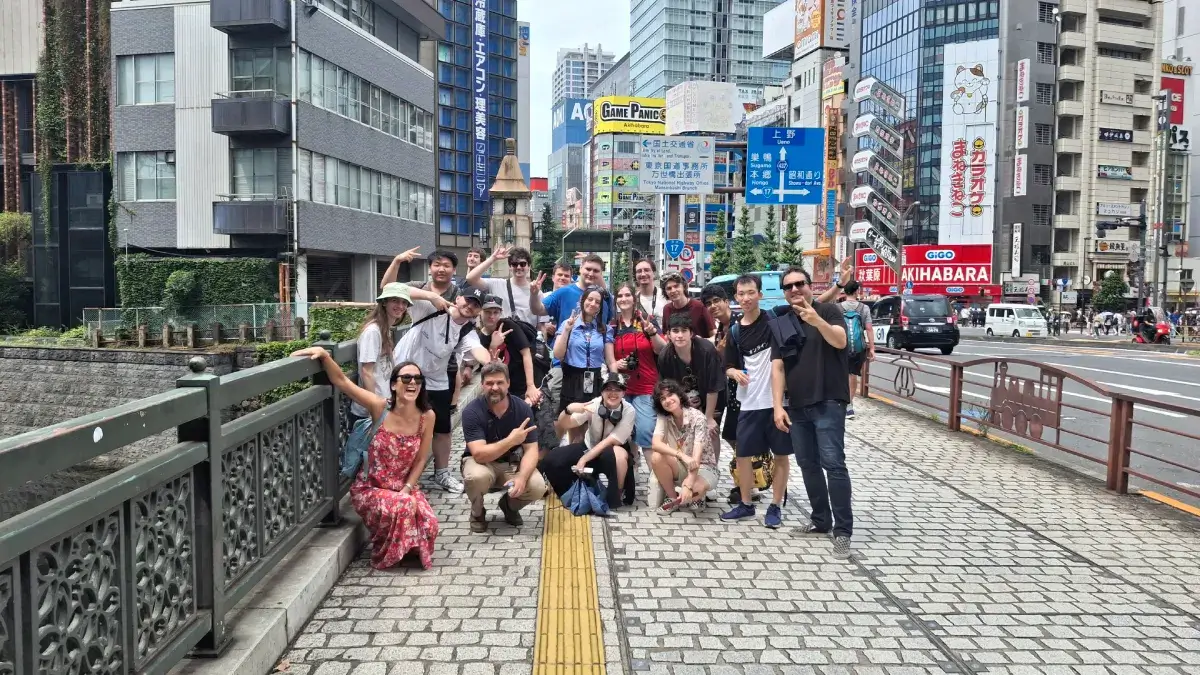
Travel
From Europe to Asia, the center organizes an annual international trip for the students.


INDUSTRY LAB MODEL
At Voxel School, we apply a pioneering model in Spain that breaks down the barriers between education, professional practice, and research. These three areas come together to drive innovation and generate results with real impact on society. Our students don’t just learn, they participate in real industry projects alongside top-tier companies, gaining hands-on experience from day one.
What our students gain:
- Learn directly from leading companies in the industry
- Gain insights from top professionals who are active in the field
- Complete internships at some of the most prestigious studios and agencies
- Work on real, high-budget projects with real-world impact

ERASMUS and International Mobility
We have a network of partner universities that allow our students to carry out academic exchanges and joint projects.







ADMISSION TO BACHELOR'S DEGREES

CONTACT WITH US
Fill out our form, call us or
request a campus visit.

AN ACADEMIC COUNSELOR WILL ASSIST YOU
A school counselor will guide you and personalize
your path according to your profile and needs.

CARRIES OUT THE ADMISSION PROCESS
Apply for admission and take
the admission tests.

WHAT DO THE ADMISSION TESTS CONSIST OF?
The candidate to study a degree at Voxel School will take the following entrance tests:
1. Artistic aptitude test: consists of a graphic expression test.
2. Digital skills test: consists of a gamified practical test for
assess the level of digital skills.


